
In professional screen printing, the frame-and-mesh assembly is the foundation of every job. While decorators spend hours tweaking ink mixtures, exposure times, and squeegee angles, none of it matters if the screen fabric is slack or poorly mounted.
Screen stretching—the process of tightly pulling and bonding polyester mesh onto a rigid frame—is a critical pre-press procedure that separates amateur prints from flawless, industrial-grade apparel branding. Here is an in-depth breakdown of how screen stretching works, why tension matters, and how it impacts your production line.
Static Frames vs. Retensionable Frames
Before diving into the mechanics of pulling mesh, you must understand the two primary frame systems used on production floors today:
- Static Aluminum/Wood Frames: The mesh is stretched tightly across the frame using external pneumatic clamps or mechanical levers and permanently glued down with heavy-duty cyanoacrylate adhesives. Once the mesh loses tension or tears, it must be completely stripped off and re-stretched in a dedicated shop setup.
- Retensionable Frames (Newman Rollers): These advanced frames feature rotatable roller sides. The mesh is attached directly to the square bars, and technicians use a socket wrench or pneumatic torque tool to turn the rollers outward, tightening the screen from within. These are ideal for high-volume shops because you can instantly re-tighten a loose mesh right on the shop floor without stripping the glue.
The Science of Tension: Newton Meters (N/cm)
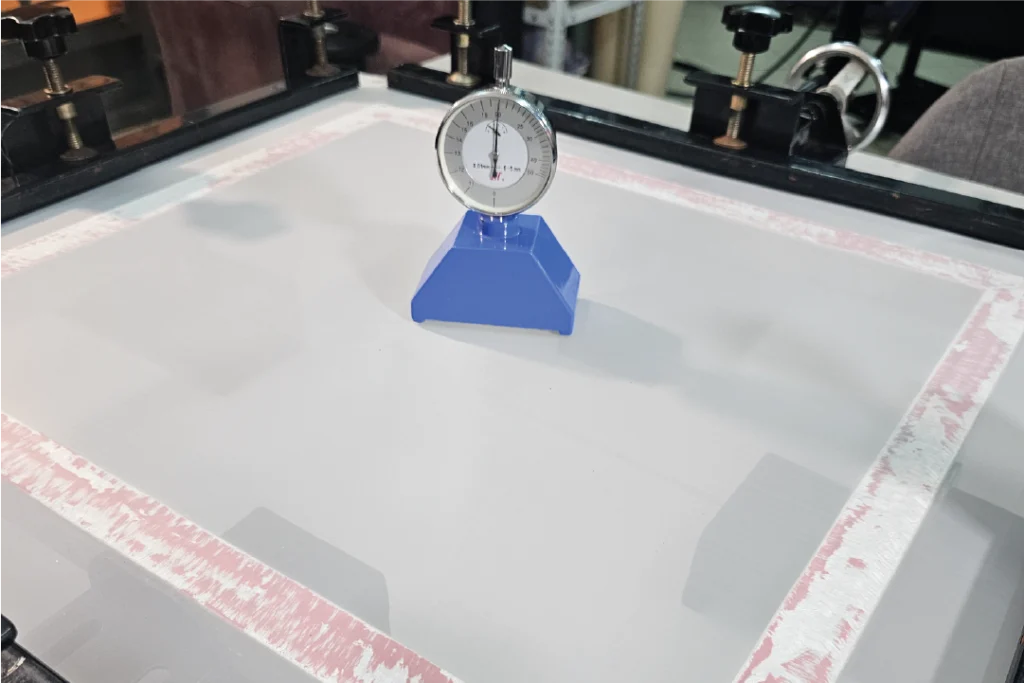
Screen tension is not measured by guesswork or “feel.” It is measured precisely using a mechanical tension meter (Newton meter) placed directly onto the fabric surface. Tension is calculated in Newtons per centimeter (N/cm).
- Low Tension (Under 15 N/cm): Bad news for your shop. Slack screens lead to blurry prints, ink smearing, poor color registration, and heavy garment sticking.
- Optimal Production Tension (18 to 28 N/cm): The sweet spot. This allows the squeegee to cleanly shear the ink through the pores, popping back up instantly without distorting your graphic edges.
- Ultra-High Tension (Over 30 N/cm): Best for high-speed automatic presses. Requires heavy-duty aluminum bars, as weak wooden frames will warp or snap in half under this intense physical force.
Step-by-Step: The Screen Stretching Workflow
For static frames, the stretching process follows four structured phases:
- Frame Prep & Degreasing: The surface of the frame is sanded down to remove old glue residues and wiped clean with solvent to ensure a perfect chemical bond with the new adhesive.
- Mesh Alignment: A roll of high-tensile polyester mesh—carefully selected by thread count (e.g., 43T for heavy white inks, 120T for fine halftones)—is unrolled over a matrix of pneumatic stretching clamps.
- The Progressive Pull: Technicians activate the pneumatic system, pulling the mesh slowly in a cross-pattern (warp and weft). Tension is increased gradually in stages over 15 to 20 minutes, allowing the polyester fibers to settle and minimize structural relaxation later.
- Gluing and Trimming: Once the target Newton score is reached, a fast-curing mesh adhesive and activator are applied along the contact border of the frame. After drying for a few minutes, the excess mesh outside the frame boundaries is cleanly trimmed away using a utility knife.
Why Tension Matters to Your Customers
Maintaining a precise screen stretching program directly influences your shop’s bottom line and product durability:
- Perfect Multi-Color Registration: When printing complex 4-color designs, every screen must have identical fabric tension. If one screen stretches or shifts under the squeegee stroke, colors will misalign, creating costly print defects.
- Soft Hand Feel: High-tension screens allow for an optimal off-contact distance (the tiny gap between the screen and the garment). This lets you print a thin, clean layer of ink rather than flooding the fabric, resulting in a premium, flexible feel on your custom t-shirts.