Creating custom t-shirts and branded merchandise is an exciting step for any business, clothing brand, or corporate team. However, walking into the world of apparel decoration can quickly feel overwhelming. With so many technical terms like DTF, sublimation, and screen printing thrown around, how do you know which method will make your design look best without breaking your budget?
Picking the wrong technology can lead to prints that crack after one wash, designs that cannot be printed on your fabric of choice, or costs that skyrocket for small orders. To help you make the right choice, this guide breaks down the five primary custom branding methods, their pros and cons, and exactly when to use each one.
1. Screen Printing: The King of Bulk Orders
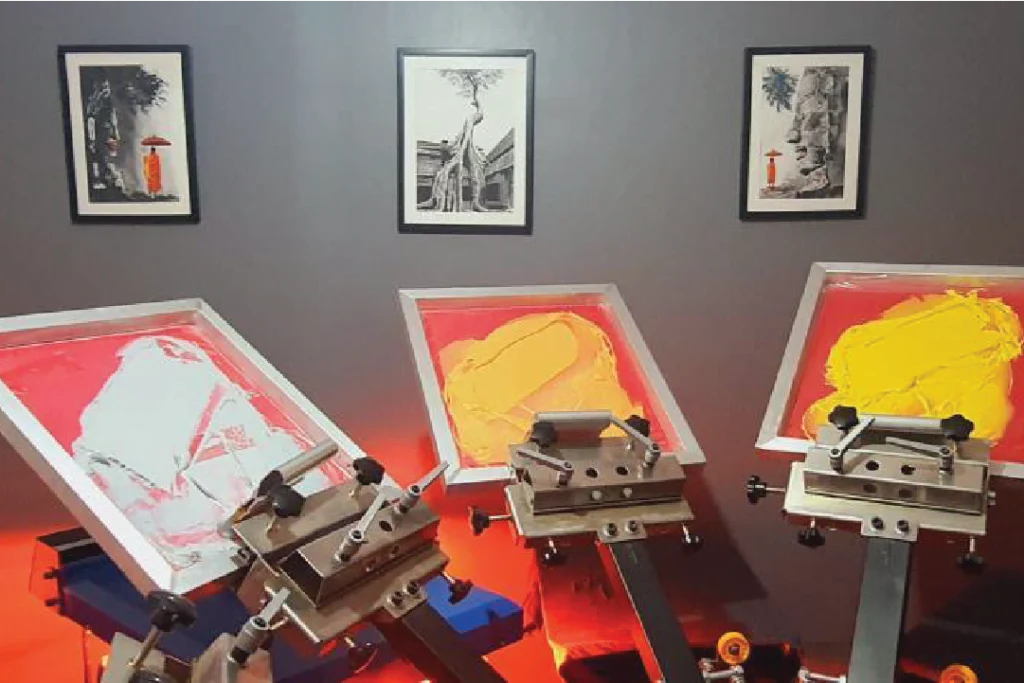
Screen printing is the traditional, time-tested method where ink is pushed through a woven mesh stencil directly onto the fabric.
-
- Best For: Large-volume orders of 20 or more items, such as event t-shirts, bulk hoodies, and canvas tote bags with simple 1- to 4-color designs.
- The Pros: It offers the lowest cost per unit at scale. The prints are incredibly durable and vibrant, and they leave a soft feel on 100% cotton garments.
- The Cons: The setup times are high. It requires a detailed prepress workflow, including color separation, screen coating, UV exposing, and eventual reclaiming. Because of this labor-intensive setup, it is highly inefficient and expensive for small batches.
2. Embroidery: The Premium Professional Choice
Instead of using ink, embroidery uses computerized multi-needle machines to stitch your logo directly into the fabric with high-quality threads.
-
- Best For: Premium corporate blazers, hospitality aprons, polo uniforms, and heavy-duty outerwear like varsity jackets, beanies, or caps.
- The Pros: It carries a very high perceived value and a professional, polished finish. It is exceptionally long-lasting and easily survives heavy industrial washing.
- The Cons: It struggles with ultra-fine text, tiny details, and complex color gradients. It also requires a specialized digital file setup known as artwork digitization.
3. DTF (Direct to Film): The Digital Revolution
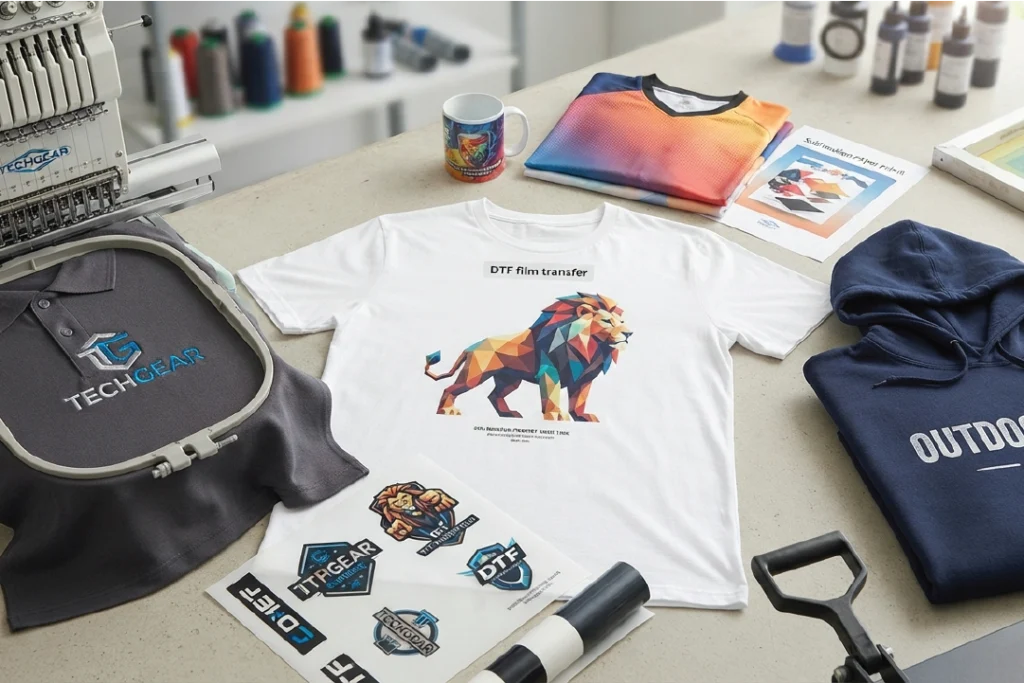
DTF is a modern digital printing method. Your full-color design is printed onto a clear film sheet, coated with a heat-activated adhesive powder, and then permanently heat-pressed onto the substrate.
-
- Best For: Small batch or on-demand printing, highly detailed photographic artwork, and complex multicolored designs on dark garments.
- The Pros: There are no minimum order quantities because setup is purely digital. It captures exceptional photographic detail and gradients perfectly, and it adheres seamlessly to cotton, polyester, and diverse blends.
- The Cons: Because the design sits on top of the fabric as a thin film layer, it can feel slightly heavy or less breathable if applied over a massive surface area.
4. Sublimation: The All-Over Print Specialist
Sublimation uses a unique scientific process where specialized digital inks are heat-fused directly into the pores of the material, turning the ink into a permanent gas that binds with the fibers.
-
- Best For: All-over print garments, activewear, sports kits, mouse pads, and specially coated hard goods like vacuum-insulated flasks, ceramic mugs, or travel tumblers.
- The Pros: It has zero physical hand feel because the ink becomes part of the fabric itself. It will never crack, peel, or fade over time, and it allows for vibrant, full-color printing.
- The Cons: It is strictly limited to 100% white or light-colored polyester for apparel. It will not work on pure cotton fabrics or dark substrates.
5. Vinyl Heat Transfer (HTV): The Personalization Favorite
Vinyl heat transfer involves using a digital plotter to cut solid-color or patterned rolls of vinyl into specific shapes, which are then manually cleaned and heat-pressed onto the item.
-
- Best For: Sports jerseys requiring individual names and numbers, basic block text, bold geometric shapes, and instant, one-off personalization.
- The Pros: It requires virtually instant setup and produces incredibly sharp, clean edges. It also opens the door to specialized finishes like reflective materials, glitter, or fuzzy textures.
- The Cons: Cleaning intricate designs can be highly labor-intensive. If exposed to high heat in household dryers, large vinyl designs can eventually warp or crack over time.
Decision Matrix: Quick Reference Guide
To quickly identify the best method for your current project, match your primary constraint to the matrix below:
-
- If you are printing 100 T-shirts with a 2-color logo: Choose Screen Printing for the best balance of cost and durability.
- If you need 10 corporate polo shirts for an upcoming trade show: Choose Embroidery to project a high-quality, professional image.
- If you are launching an online store and printing single orders as they come in: Choose DTF to avoid inventory costs and handle complex colors.
- If you are designing full-coverage sports jerseys or custom ceramic coffee cups: Choose Sublimation for seamless, permanent graphics.
- If you are numbering a local football team’s kits: Choose Vinyl Heat Transfer for quick, precise names and numbers.
By matching the right technology to your specific fabric type, budget, and order volume, you ensure your branded merchandise looks professional and lasts for years to come.